


Table of Contents

Table of Contents
The Connect Convert Methodology for Law Firm Growth
If you want to know where your marketing dollars are really going, look beyond the number of calls and into the data that tells the real story. Data always tells the truth, and it is usually in the form of key performance indicators (KPIs). Tracking metrics like lead response times, call duration, qualification rates, and client conversion percentages can reveal exactly where potential clients drop off and where your team excels. By focusing on these KPIs, law firms can identify strengths and gaps in their intake and sales process, uncovering missed opportunities and charting a clear path to higher conversion rates.
When your team knows which actions move the needle, you can refine scripts, coach more effectively, and see measurable gains in new client retention. Ultimately, a commitment to data-driven improvement maximizes your marketing ROI and creates a better experience for every potential client.
To translate these insights into practical results, we created a framework at Marketing Boss that reveals exactly how you can turn every call into an opportunity to build rapport and secure commitment. It’s called the Connect Convert Methodology.
The Connect Convert Methodology is a structured approach designed to transform how your intake and sales teams engage with every caller. By breaking down the client conversation into eight essential stages, this methodology equips your team with the targeted skills and systems needed to take clients from initial inquiry to a signed case.
Implementing this system helps your firm boost conversion rates, ensures your marketing investments pay off, and delivers a consistent, high-quality client experience from the very first contact.
Breaking Down the Connect Convert Methodology
This methodology provides a clear roadmap for your team to follow on every call. Each stage has a specific purpose, building upon the last to create a seamless journey from introduction to signed retainer.
1. The Greeting: Setting the Stage for Success
The first five seconds of a call determine its trajectory. A rushed, unenthusiastic, or unprofessional greeting immediately creates a barrier. The goal is to set a positive, welcoming tone that makes the caller feel heard and valued from the start.
Best Practice: A live attendant should answer every call. Your team’s greeting should be friendly, professional, and convey genuine enthusiasm. Assess the effectiveness of your greeting script. Does it build rapport? Does it establish trust from the first words? A warm, confident first impression shows the PNC they have called the right place.
2. Qualifying: Identifying High-Value Opportunities
Not every caller is the right fit for your firm. Effective qualification is crucial for allocating your resources efficiently. This stage involves asking strategic, probing questions to understand the PNC’s situation, their legal needs, and whether their case aligns with your firm’s expertise.
Best Practice: Train your team to move beyond a simple checklist. They need to assess qualification skills by digging deeper. How well do they uncover the core details of the potential case? Strong qualification ensures your attorneys’ time is spent on the most promising opportunities, preventing wasted effort on leads that will not convert.
3. Empathizing: Building an Emotional Connection
Potential clients are often calling you during a moment of stress, fear, or uncertainty. Simply processing the facts of their case is not enough. Empathy is the tool that builds the emotional bridge necessary for trust.
Best Practice: Evaluate your team’s ability to demonstrate empathy and provide reassurance. This involves active listening, validating the PNC’s concerns, and showing genuine understanding. Phrases like “That sounds incredibly stressful” or “I’m so glad you called us for help with this” make the client feel seen. Reassuring them that you are there to help and confident in your firm’s ability to handle their situation builds the trust needed to move forward.
4. Preparation: Preparing the Client to Say “Yes”
Before you ask for a commitment, you must clearly establish the value of that commitment. This stage is about proactively demonstrating why your firm is the best solution for their problem. You are preparing them to say “yes” by making the value proposition undeniable.
Best Practice: Your team must be skilled at articulating the benefits and positive outcomes clients can expect. How effectively do they communicate your firm’s unique strengths before discussing fees or scheduling an appointment? By framing the consultation or representation as the logical next step toward solving their problem, you make the decision to proceed an easy one for the client.
5. Assurance: Projecting Confidence and Value
The way your team discusses fees and next steps has a profound impact on the client’s perception of value. Hesitation or apology in your voice signals a lack of confidence. This stage is about creating an atmosphere of assurance and trust through confident communication.
Best Practice: Assume the sale. This mindset shift is critical. Your team should confidently state the price, assuming it is reasonable for the immense value being provided. Express the assumption that the PNC is eager to secure high-quality legal services. This confident approach encourages the client to recognize the value you offer and increases their likelihood of agreeing to the terms.
6. Personalization: Making the Client Feel Important
People want to do business with people who care about them. Using a caller’s name, listening to their story, and referencing details they’ve shared makes the interaction feel personal, not transactional. Personalization is a powerful tool for building rapport.
Best Practice: Analyze how frequently your team uses the PNC’s name during the conversation. This simple act shows attentiveness and respect. Furthermore, assess your team’s ability to gather accurate contact information while setting a clear expectation for follow-up. A personalized experience makes the client feel like more than just another lead in your system.
7. Reassurance: Reinforcing the Decision
This stage often occurs during appointment scheduling or the final steps of signing an agreement. It’s an opportunity to reinforce the value you established earlier and reassure the client they are making the right choice. It is another touchpoint to build confidence.
Best Practice: As you schedule the next step, continue to highlight the benefits the client will receive. Assume they want to move forward because of the value presented. By consistently reinforcing the positive outcomes, you help the client feel secure in their decision and eager to proceed.
8. Commitment: Securing the Sale
The final step is to confidently ask for the sale and guide the PNC to the next step. This requires promoting your legal team’s expertise and using assumptive language that makes commitment feel like a natural and expected outcome.
Best Practice: Evaluate your team’s ability to promote a positive image of your attorneys and convey absolute confidence in their expertise. Use assumptive selling techniques like, “Our next step is to schedule your strategy session with the attorney. What day works best for you?” This approach confidently guides the PNC across the finish line, transforming a potential client into a retained one.
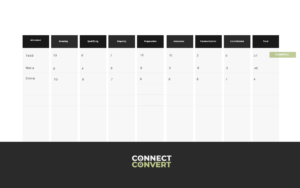
One of the most powerful advantages of the Connect Convert Methodology is its ability to generate actionable KPIs for your customer service process. Unlike generic metrics, these KPIs give you precise, data-driven insights into how well your team is engaging, qualifying, and converting leads at each stage of the client journey. By tracking performance across all eight Connect Convert steps, you gain a clear view into service quality that goes well beyond surface-level statistics. Most importantly, these KPIs have proven to be strong indicators of success—when each step is performed effectively, your firm can achieve sign-up rates as high as 90% for qualified leads. This data empowers you to coach your team, fine-tune your process, and predictably boost your conversion rates.
Sample Scorecard
The Connect Convert KPI’s can be used in a scorecard like the one below to evaluate calls and generate data around customer service that is precise, so the feedback is actionable and improvements are measurable.
Transform Your Intake, Grow Your Firm
The Connect Convert Methodology provides the structure, skills, and mindset shift necessary to turn your intake team into a revenue-generating powerhouse. By moving from a passive, administrative process to an active, empathetic, and strategic one, you can stop leaking leads and start maximizing the potential of every call.
Equip your team with this proven framework and watch as your client conversion rates—and your firm’s revenue- begin to climb.
FREE on-demand Law Firm Sales Course
Click HERE to enroll now
Sales and Inevitable When You Connect
It’s important to remember that, when implemented correctly, the Connect Convert Methodology isn’t about convincing or persuading prospects or tirelessly overcoming objections. Instead, it is designed to create such clarity, trust, and value throughout the conversation that clients naturally come to their own confident decision to move forward. The process eliminates resistance by making the next step feel obvious and safe, freeing your team from the pressures of high-pressure sales tactics and enabling more authentic, genuine client relationships. Want some help applying this methodology at your law firm? Let’s connect! Book a time HERE.
Sign up for our newsletter to get more articles like this in your inbox

Written By Margarita Eberline
At Marketing Boss, I help law firms like yours simplify, systemize, and scale their marketing efforts. Early in my career, I took on a sales role at Telemundo Atlanta, where I connected with local attorneys and was inspired to launch my own full-service advertising agency. Over the years, I realized that the traditional agency business model was fundamentally incompatible with my desire to remain fully tactic-agnostic and data-driven in my recommendations to clients. This led me to launch Marketing Boss, where I could focus on creating unbiased strategies that serve my clients’ needs.
Insights from the Marketing Boss Team


Your Firm Deserves Marketing That Works

Your Firm Deserves Marketing That Works